A disagreement can change direction in seconds. A child may be teased at school, a teen may feel challenged in a parking lot, or an adult may face someone who is angry, impaired, or simply looking for a reaction. The goal is not to win the exchange. It is to reduce conflict safely, protect everyone involved, and leave with your dignity intact.
That takes more than being told to “walk away.” It takes awareness, emotional control, clear communication, and the confidence to make good decisions under pressure. Martial arts training can support all of those skills, but its first lesson is not how to fight. Its first lesson is knowing when fighting is not the answer.
Why Safety Comes Before Being Right
When emotions run high, people often focus on proving a point. They want the other person to understand, apologize, back down, or admit they were wrong. In a calm conversation, that may be possible. In a tense situation, trying to be right can keep the conflict going long after it should have ended.
Safety asks a different question: What choice gives this situation the best chance of ending without anyone getting hurt?
That question may lead to a conversation, an apology, a boundary, or a decision to leave. It may mean getting a teacher, parent, supervisor, security professional, or trusted adult involved. If there is an immediate threat, it means creating distance and contacting emergency services when possible.
Choosing safety is not weakness. It is self-control. It is the ability to recognize that a moment of pride is never worth an injury, a legal problem, or lasting harm to another person.
How to Reduce Conflict Safely Before It Escalates
Most conflicts give signals before they become physical. Voices get louder. Personal space gets smaller. Someone repeats a challenge, blocks a path, clenches their fists, or tries to draw an audience into the situation. Learning to notice these signs early gives you more options.
Create space without creating drama
Distance is one of the simplest safety tools available. Take a step back. Turn slightly sideways rather than standing squarely face-to-face. Keep your hands visible and relaxed near your chest, as if you are calmly explaining something. This posture can look non-threatening while also helping you protect yourself if the other person moves suddenly.
For children and teens, this can be practiced in simple language: “Back up, hands up, use a calm voice, and find an adult.” The goal is not to look tough. The goal is to give the body room to move and the mind room to think.
If you are in a public place, move toward people, light, and exits. Avoid allowing yourself to be cornered in a hallway, stairwell, parking area, or room with no clear way out. A safe exit is often more valuable than the perfect response.
Use words that lower the temperature
A calm voice does not guarantee that another person will calm down, but it can prevent you from adding fuel to the moment. Short, clear phrases work better than arguments. Try statements such as, “I don’t want trouble,” “Please give me space,” or “I’m leaving now.”
Avoid insults, sarcasm, threats, and challenges. Even a clever comeback can make someone feel embarrassed in front of others, which may push them to escalate. This does not mean accepting disrespect. It means setting a boundary without turning the conflict into a contest.
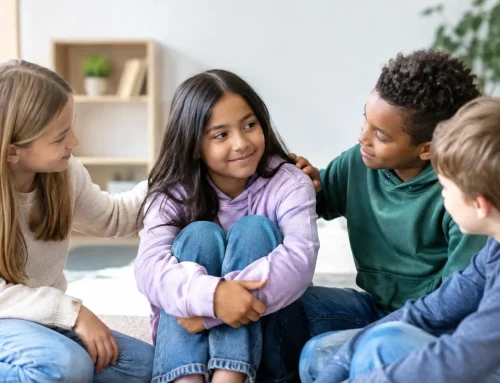
For bullying situations, children can rehearse a strong, simple response: “Stop. That is not okay.” Then they should move toward support rather than remaining alone to debate the issue. Repeated bullying should be documented and shared with parents, school staff, or appropriate leaders. Asking for help is a responsible next step, not tattling.
Regulate your own body first
Conflict affects the nervous system. The heart races, breathing becomes shallow, muscles tighten, and the brain can shift into a quick-reacting survival mode. That is why people sometimes say or do things they regret only moments later.
A useful reset is to breathe in slowly, then make the exhale longer than the inhale. Drop your shoulders. Feel both feet on the ground. Look around instead of locking your eyes on the other person. These small actions help signal to your body that you can still make choices.
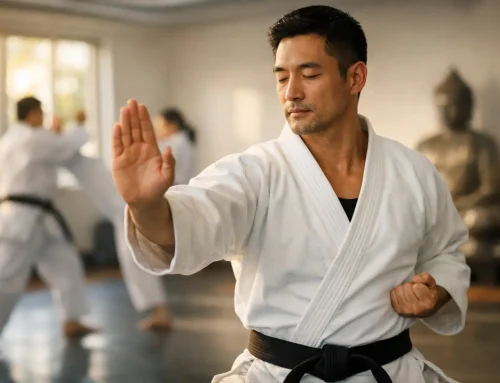
This is one reason disciplined martial arts practice matters. Students repeatedly work on balance, breathing, posture, awareness, and controlled movement. Over time, they learn that calm is not something they either have or do not have. It is a skill they can practice.
Confidence Is Different From Confrontation
People sometimes believe they need to appear aggressive to avoid being targeted. In reality, confident body language is usually quiet. Stand upright. Make brief, natural eye contact. Speak clearly. Know where you are going. Stay connected to the people around you.
Confidence does not require pretending that you are fearless. It means trusting that you can respond wisely, seek help, and use the skills you have practiced. For a child who has been bullied, that confidence may begin with speaking louder, standing taller, and knowing they have supportive adults behind them. For an adult, it may mean recognizing that leaving a heated encounter is a success, not a loss.
Training should never encourage students to seek confrontation or test themselves against strangers. At OC Training Studio, martial arts are taught as a path toward discipline, personal growth, and practical safety. Skills are practiced with structure, supervision, and respect so students can become more prepared without becoming more reckless.
When Physical Self-Defense May Be Necessary
The safest outcome is always to avoid physical contact. Still, there are moments when someone cannot leave, cannot get help quickly, or faces an immediate physical threat. In those situations, self-defense is about creating an opportunity to escape, not punishing the other person.
A practical response depends on the setting, the people involved, the level of danger, and whether there is a path to safety. There is no one move that solves every situation. What matters is staying aware, protecting vulnerable areas, using your voice to draw attention, and moving toward escape as soon as possible.
This is where in-person instruction has real value. Students can practice balance, positioning, controlled releases, safe falling, distance management, and decision-making with qualified guidance. Within Shaolin Kempo Karate training, students may also develop Jiu-Jitsu-based skills that emphasize leverage, control, and escape rather than relying on size or strength alone.
Even then, the responsibility remains the same: use only the force needed to get safe, stop when the danger ends, and seek help immediately afterward. Physical techniques are a last resort, not a first response.
Helping Children and Teens Practice Safe Choices
Families can make conflict safety part of regular conversation instead of waiting for a serious incident. Ask children what they would do if someone called them names, tried to start a fight, or made them uncomfortable online or in person. Listen without judgment, then help them build a simple plan.
A strong plan includes who they can tell, where they can go, and what words they can use. Children benefit from role-playing these moments with a parent or instructor. Practicing “No,” “Stop,” “I need help,” and “I’m going to my teacher” makes those responses easier to access under stress.
Teens also need room to discuss the social pressure around conflict. They may worry about looking weak, being filmed, losing friends, or being judged for walking away. Honest conversations can remind them that social media attention disappears quickly, while injuries, school consequences, and trauma can last much longer.
Adults can model the same standard. Children notice how parents respond to rude drivers, difficult neighbors, customer-service frustrations, and disagreements at home. Calm boundaries teach more than lectures ever will.
Build Skills in a Supportive Community
Conflict prevention is not only learned in a crisis. It grows through regular practice in an environment where people are challenged, respected, and encouraged. A welcoming martial arts community gives students a place to build coordination, focus, resilience, and confidence alongside people who want to see them succeed.
The best training does not promise that conflict will never happen. Life is too unpredictable for that. It helps people become less likely to panic, less likely to escalate, and more capable of choosing a safe response when something feels wrong.
The next time tension appears, remember that you do not have to prove anything. Create space, use a steady voice, look for support, and choose the path that protects your future as well as your present moment.