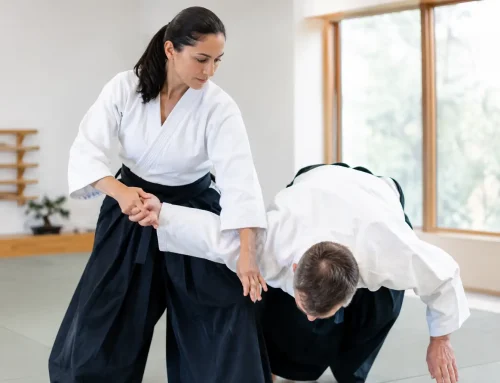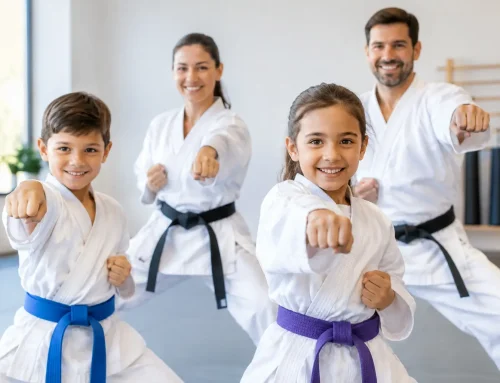
A child who suddenly wants to stay home, loses interest in school, or becomes unusually quiet may be carrying more than a difficult day. Parents often tell us that martial arts helped stop bullying not because their child learned to fight, but because they learned how to stand taller, speak clearly, recognize unsafe situations, and ask for support.
That distinction matters. Bullying is not a problem a child should have to solve alone, and physical confrontation is rarely the best first response. The right martial arts environment teaches skills that help young people protect their safety and self-respect while staying connected to trusted adults, family members, teachers, and peers.
How Martial Arts Helped Stop Bullying Without Promoting Fights
A quality martial arts program does not teach children to answer hurtful words with punches. It teaches self-control before self-defense. Students practice listening, following directions, managing frustration, and respecting personal boundaries. Over time, those habits can change how a child carries themselves in the hallway, on the playground, and in unfamiliar social situations.
Bullies often look for an easy reaction: fear, isolation, anger, or someone who seems unlikely to speak up. Martial arts cannot make bullying disappear, but it can help a child become less vulnerable to those dynamics. Calm posture, eye contact, a firm voice, and the ability to leave a situation with purpose can communicate confidence without escalating conflict.
Training also gives children a place to experience progress. A new stance may feel awkward at first. A partner drill may require patience. A difficult technique may take several weeks to understand. When a student keeps showing up and sees improvement, they gain evidence that effort works. That confidence is more durable than simply being told to “be brave.”
Confidence Is Different From Aggression
Some parents understandably worry that martial arts will make their child more aggressive. The outcome depends heavily on the culture of the class and the guidance of the instructor. A program built around discipline, safety, and respect can give energetic children healthy structure while helping quieter children find their voice.
Real confidence is not loud. It is the ability to stay composed when someone tries to provoke you. It is knowing you have options. It is understanding that walking away, getting help, and setting a boundary are signs of strength.
For children who have been targeted, this can be especially meaningful. Bullying can make a young person feel powerless or embarrassed, even when they have done nothing wrong. Martial arts class offers a different message: you are capable of learning, you deserve respect, and you belong in a community that wants to see you grow.
The Skills Children Practice Carry Beyond the Mat
The anti-bullying value of martial arts is often found in ordinary class moments. Students learn to wait their turn, work with different partners, accept correction, and reset after a mistake. These are social and emotional skills, not just physical ones.
They also practice awareness. Rather than moving through a crowded school day on autopilot, children can learn to notice distance, tone of voice, exits, and the people around them. Awareness is not about living in fear. It is about making thoughtful choices early, before a situation gets worse.
Verbal confidence matters, too. A child may rehearse simple, age-appropriate phrases such as “Stop. Don’t talk to me like that,” or “I’m leaving now.” The goal is not to win an argument. The goal is to make a clear boundary, move toward safety, and report what happened to an adult who can help.
Physical self-defense has a place, but it should be taught responsibly. Children need to understand that physical skills are for immediate safety when escape is not possible, not for retaliation, showing off, or settling social conflicts. Good instruction places judgment and de-escalation ahead of technique.
What Parents Can Do Alongside Martial Arts Training
Martial arts is strongest when it is part of a larger support system. If your child is being bullied, listen without rushing to minimize the problem or immediately take over the conversation. Ask what happened, where it happened, who was involved, and whether they feel safe returning to that setting.
Then help create a simple plan. Depending on the situation, that may include speaking with a teacher, school counselor, coach, or administrator and documenting repeated incidents. If there are threats, physical harm, harassment, or online targeting, prompt adult intervention is essential.
At home, avoid putting the burden on your child to become “tough enough” to prevent mistreatment. No amount of confidence makes bullying the target’s fault. Instead, reinforce what they can control: using a strong voice, staying near supportive peers, leaving unsafe situations, reporting clearly, and continuing activities that build connection.
A martial arts instructor can be a valuable mentor in this process, but they should not replace school staff or family communication. The most caring instructors welcome appropriate conversations with parents and encourage students to seek help from the adults responsible for their daily environment.
Choosing a Class With the Right Values
Not every martial arts school approaches youth development in the same way. Families should look beyond belts, trophies, and dramatic demonstrations. The question is not simply, “Will my child learn self-defense?” It is, “Will my child be treated with patience, challenged safely, and taught how to use these skills wisely?”
A healthy beginner-friendly class should make expectations clear. Students should understand that respect applies to instructors, training partners, family members, and themselves. Corrections should be firm but encouraging. Sparring or contact work, if offered, should be carefully supervised and appropriate for each student’s age, experience, and comfort level.
It also helps when a program values belonging over intimidation. Children learn best when they are not afraid to make mistakes. They need training partners who celebrate improvement, mentors who notice their effort, and a space where they do not have to prove they are the toughest person in the room.
At OC Training Studio, that community-centered approach is part of the purpose of training. Martial arts is an opportunity to develop physical ability, yes, but also empathy, resilience, and the confidence to make better choices under pressure.
When Martial Arts May Need Extra Support
Martial arts can be a meaningful part of healing, but it is not a one-size-fits-all answer. A child dealing with severe anxiety, trauma, repeated violence, or ongoing harassment may need additional support from school professionals, a pediatrician, or a qualified mental health provider. Training should feel empowering, not like another demand placed on a child who is already overwhelmed.
It is also okay if a student needs time before joining a group class. Watching a class, trying a gentle introductory lesson, or starting with a supportive friend can make the experience feel more manageable. Progress is personal. The best first step is the one that helps a child feel safe enough to take the next one.
A child does not need to become a fighter to feel strong. Sometimes strength begins with a steady breath, a confident “no,” a trusted adult nearby, and a community that reminds them they never have to face hard moments alone.