A slow form can be easy to underestimate. That is why the statement “Tai Chi is real fighting” often surprises people who have only seen graceful movements in a park. Yet Tai Chi was developed as a martial art, and its calm appearance does not erase its practical purpose. The real question is not whether Tai Chi can be used for self-defense. The question is how it is trained.
Tai Chi Is Real Fighting, Not Just Slow Movement
Tai Chi develops qualities that matter in any close-range encounter: stable balance, upright posture, coordinated movement, awareness of distance, and the ability to stay relaxed under pressure. A person who panics, stiffens, or loses their footing is at a disadvantage, regardless of their size or athletic ability.
The slow forms are a training method. Moving slowly gives students time to notice where their weight is, whether their shoulders are tense, and whether their body is connected from the feet through the hands. Those details can be hard to build when every class is fast, loud, and exhausting.
Still, form alone is not fighting. Memorizing a sequence without learning its applications is like practicing emergency instructions without ever rehearsing what to do. Tai Chi becomes martial training when students also learn how movements relate to positioning, escapes, redirection, strikes, control, and safe responses to force.
What Practical Tai Chi Training Should Include
A practical class does not need to be aggressive to be honest. It should give students a safe way to test their posture, timing, and decision-making with another person. Partner work is where the lessons of the form begin to make sense.
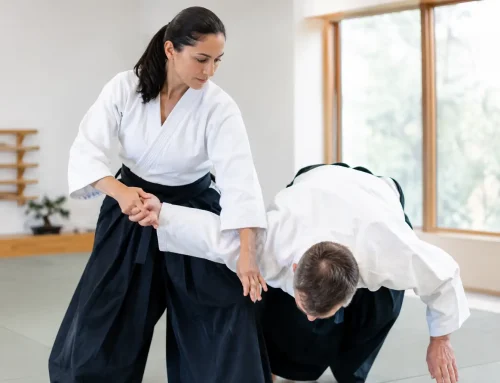
Push hands is one well-known Tai Chi exercise. In this practice, partners maintain gentle contact while learning to feel changes in pressure, balance, and direction. The goal is not to overpower someone. It is to recognize when a person is pushing, pulling, leaning, or becoming unstable, then respond without losing your own structure.
That skill has limits. Push hands is not the same as a real confrontation, and responsible instructors should say so plainly. Real self-defense can involve surprise, fear, uneven ground, multiple risks, and choices that have nothing to do with winning. But push hands can help students practice sensitivity and composure in a controlled setting before pressure increases.
Good instruction also includes realistic boundaries. A student should understand when to create distance, when to use a clear voice, when to leave, and when getting help is the best response. For children and teens, that may mean practicing confidence, anti-bullying awareness, and seeking a trusted adult rather than trying to “win” a physical conflict.
The Strength of Tai Chi Is Efficiency
Tai Chi does not ask people to meet force with more force. It teaches them to use alignment, angles, and timing intelligently. When someone pushes directly into resistance, they often become easier to redirect. When they overextend, their balance may be compromised. These principles can be useful for adults of many ages and fitness levels.
That does not mean Tai Chi gives anyone superhuman ability. Size, strength, experience, and the circumstances of an encounter still matter. Nor does it mean a beginner should expect to handle a trained fighter after a few classes. Practical skill takes consistent training, patient correction, and respectful partner practice.
What Tai Chi can offer is a foundation: better body awareness, calmer breathing, stronger balance, and a more thoughtful response to pressure. Those benefits support martial arts training, daily movement, and personal confidence at the same time.
Why Calm Training Builds Real Confidence
Some people believe self-defense training must feel intimidating to be effective. In reality, a supportive environment often helps students learn more. When people feel safe enough to make mistakes, ask questions, and practice at an appropriate pace, they can build skill without shutting down.
This is especially meaningful for beginners, families, and students who may not be looking for tournament competition. At OC Training Studio, martial arts are taught as a path toward confidence, health, discipline, and positive connection. Tai Chi fits that mission because it invites people to train with focus rather than fear.
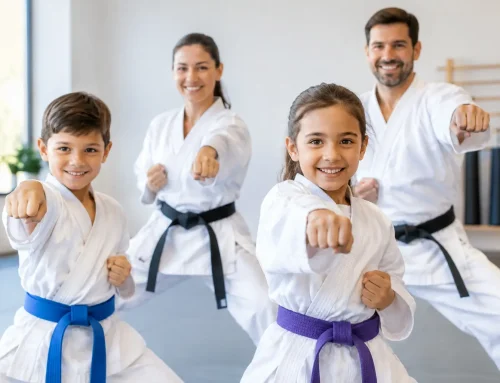
For an older adult, the first victory may be improved balance and the confidence to move with less hesitation. For a child, it may be learning to stand tall, use a strong voice, and stay composed when someone invades their space. For a martial artist with more experience, it may be discovering that relaxation and precise timing can be more useful than brute effort.
Tai Chi deserves to be seen for its full value: a mindful practice with genuine martial roots, not a shortcut or a fantasy. Find instruction that respects both sides of the art – the health benefits and the practical applications – and give yourself time to learn what calm, connected movement can teach.