A child who feels confident does not need to act tough. They need to recognize when something feels wrong, use their voice, move toward safety, and know that trusted adults will listen. This parent guide to youth self defense is not about teaching children to fight. It is about helping them build practical awareness, calm decision-making, and the belief that their safety matters.
For many families, self-defense becomes a conversation after a bullying incident, an uncomfortable walk home, or a worrying story in the news. Those moments can be a starting point, but fear should not be the teacher. The most lasting lessons come from steady practice, supportive mentoring, and clear family conversations that make safety feel manageable rather than scary.
A Parent Guide to Youth Self Defense Starts With Prevention
The strongest self-defense skill is often noticing a problem early enough to avoid it. Children and teens can learn to pay attention to their surroundings without becoming anxious or suspicious of everyone around them. That means looking up from a phone, noticing where other people are, knowing how to find a safe adult, and trusting the uneasy feeling that says, “I want to leave.”
At home, talk through ordinary situations instead of turning every conversation into a warning. Ask your child what they would do if a classmate kept invading their personal space, if they were separated from a group at an event, or if an older student pressured them to go somewhere private. Let them offer ideas first. Then help them identify safer choices, such as staying with friends, moving to a populated area, calling home, or telling a nearby adult.
Prevention also means helping children understand that politeness has limits. They do not owe anyone a hug, a conversation, a secret, or access to their body. A child can be respectful while saying, “No,” “Stop,” or “I need to find my parent.” Practicing those words aloud makes them easier to use when a child is nervous.
Teach Boundaries Without Teaching Fear
Youth self-defense should reinforce a simple message: your body belongs to you. This is useful for young children learning personal space, middle schoolers handling peer pressure, and teens navigating increasingly independent social lives.
Use direct, age-appropriate language. Younger children may practice keeping “bubble space” around themselves and finding a teacher when someone will not stop bothering them. Older children can discuss consent, digital boundaries, rides with friends, parties, and what to do when a situation feels confusing rather than obviously dangerous.
It helps to explain that a person does not have to look threatening to cross a boundary. Sometimes the issue is a friend who will not stop roughhousing, a teammate making unwanted comments, or someone online asking for private information. Children deserve permission to step away, block contact, speak up, and ask for help without worrying that they are overreacting.
When they do come to you with a concern, begin with calm attention. Questions like “Are you safe right now?” and “What would help you feel supported?” can open the door better than immediately interrogating them or minimizing what happened. Your response teaches them whether it is safe to keep asking for help.
Build a Safety Plan Your Child Can Actually Use
A safety plan should be simple enough to remember under stress. Avoid handing your child a long list of rules. Instead, create a few clear actions that fit the places they regularly spend time: school, sports, friends’ homes, neighborhood parks, and online spaces.
For most children, the plan can come back to three ideas: create distance, get loud when needed, and get to help. If someone is making them uncomfortable, they can move away and toward other people. If a boundary is being ignored, a firm voice can draw attention: “Stop. Don’t touch me.” If they cannot leave easily, they should look for a teacher, staff member, coach, parent, security guard, or other trusted adult.
Make the plan specific. Decide on a family code word for pickup changes. Ensure your child knows your phone number, home address, and who they may contact if they cannot reach you. For teens with phones, talk about location sharing, battery habits, and the difference between checking in and being constantly monitored. Trust grows when safety planning is collaborative rather than controlling.
Role-playing can help, especially when it stays brief and low-pressure. Practice what your child might say when they want to leave a friend’s house, refuse a ride, or get away from unwanted grabbing. The goal is not to make them perform perfectly. It is to make safe responses feel familiar.
Why Physical Training Still Matters
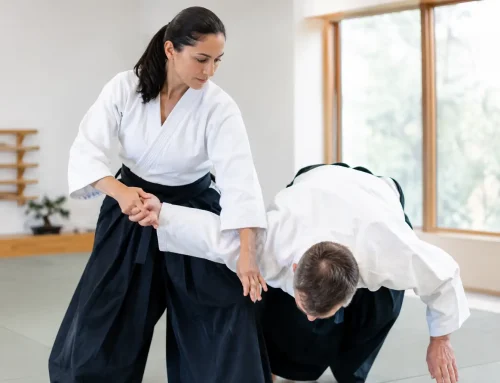
Awareness and communication come first, but physical training has an important place in youth self-defense. A well-taught martial arts program helps children understand balance, distance, posture, movement, and how to protect themselves if they cannot immediately get away.
Just as valuable, training gives children a safe place to practice staying composed when something is challenging. They learn to listen, regulate frustration, respect partners, and continue after mistakes. Those qualities can show up at school, on a team, in friendships, and during stressful moments.
Parents should look for instruction that is centered on safety, control, and character. Young people do not need to be encouraged to “win” every conflict. They need instructors who teach them that physical skills are a last resort, used to create an opportunity to escape and find help. A healthy program should make students more disciplined and considerate, not more aggressive.
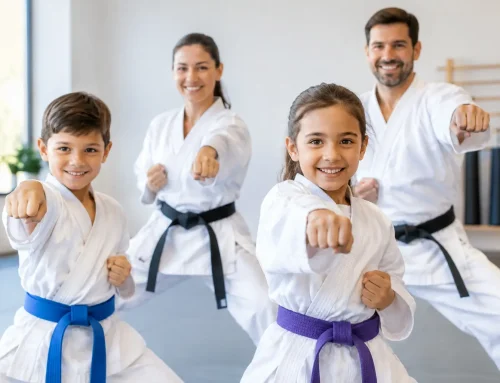
At OC Training Studio, youth martial arts instruction is designed around that broader purpose: confidence, awareness, respectful discipline, and belonging. Within a structured Shaolin Kempo Karate system, students can develop practical skills that include standing defense and controlled grappling concepts while learning that strength is guided by responsibility.
Match the Conversation to Your Child’s Age
There is no one self-defense talk that works for every child. A kindergartner needs a different plan than a high school student, and personality matters too. A naturally cautious child may need reassurance and calm practice. A bold, impulsive child may need more reminders about walking away, getting an adult, and never treating physical skills as a game outside class.
For elementary-age children, focus on identifying trusted adults, body boundaries, loud clear words, and staying with their group. Keep examples concrete. “If you cannot find me at the store, go to the cashier,” is more useful than a vague instruction to be careful.
For middle schoolers, add bullying, group dynamics, locker room behavior, messaging apps, and the pressure to prove themselves. Remind them that walking away from a challenge is not weakness. It is judgment. If bullying is persistent, document what happened and involve school staff rather than asking your child to handle an ongoing problem alone.
For teens, discuss social settings honestly. They may encounter rides, dating, substances, parties, and online interactions that require mature decisions. Encourage them to call for help without fearing automatic punishment. A teen who knows they can contact you for a safe ride is more likely to reach out before a difficult situation becomes dangerous.
Make Confidence Part of Everyday Family Life
Children gain confidence when adults give them meaningful chances to make decisions, solve small problems, and recover from mistakes. Self-defense is not limited to a class or a single conversation. It grows when a child learns to speak clearly at a restaurant, order for themselves, ask a coach a question, or tell a friend, “I do not like that.”
Praise the behaviors you want to see. Instead of only saying, “Good job,” try, “I noticed you moved closer to the teacher when you felt uncomfortable,” or “You spoke clearly when you said no.” Specific encouragement helps children recognize their own good judgment.
Most of all, keep the door open. Your child may not use the exact words you taught, and they may make choices you would have handled differently. What matters is that they know they are not alone. With patient guidance, supportive training, and a community that values their growth, young people can carry themselves with greater confidence while still keeping their kindness intact.