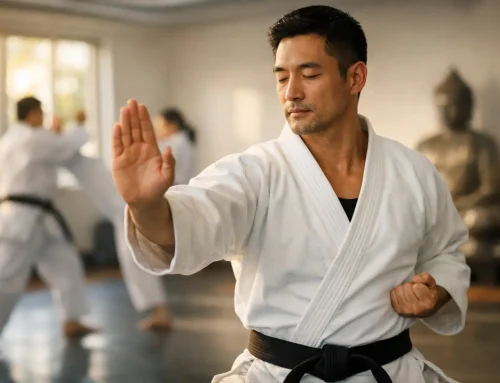
A teenager should not have to choose between feeling challenged and feeling safe. The best training environment provides both: a place to work hard, learn practical skills, make mistakes, and grow under the care of adults who take their well-being seriously. This teen martial arts safety guide helps families recognize what that kind of training looks like.
Martial arts can be a powerful outlet during the teen years. It gives young people a constructive way to build strength, confidence, focus, and self-control while becoming part of a community. But safety is more than helmets, mats, and rules posted on a wall. It comes from thoughtful instruction, clear communication, respectful training partners, and a culture where a teen can speak up without embarrassment.
Start With the Culture, Not the Style
Families often begin by comparing styles. That can be useful, but the quality of the learning environment matters more than whether a program teaches striking, forms, throws, or grappling. A safe school teaches students that skill is not permission to intimidate others. Respect, control, and awareness should be part of every class.
Watch how instructors respond when students struggle. Do they correct mistakes calmly? Do they group students by age, size, and experience when partner work is involved? Are beginners given time to learn fundamentals before being pressured into fast or intense drills? These details reveal whether the program values long-term development over showing off.
At OC Training Studio, martial arts instruction is meant to support well-rounded growth, not create a room full of aggressive competitors. For many teens, that mission-driven approach makes it easier to try something new, especially if they are nervous, returning to activity after time away, or looking for a positive response to bullying or social stress.
A Teen Martial Arts Safety Guide Starts With Clear Expectations
Before the first class, teens and parents should understand how training works. A good instructor explains what students will practice, what protective equipment is needed, how contact is managed, and what to do if someone feels uncomfortable or hurt. There should be no mystery around sparring, partner drills, or physical boundaries.
Teenagers also need permission to communicate. They should know that saying “slow down,” “that hurts,” or “I need a break” is responsible, not weak. Instructors can reinforce this by checking in before drills, demonstrating controlled contact, and stopping unsafe behavior immediately.
Parents can help by having a simple conversation at home after the first few classes. Ask more than whether training was fun. Ask whether the teen felt listened to, whether partners were respectful, and whether the instructor explained how to practice safely. A teen who feels pressured to hide discomfort may need more support or a different class setting.
Contact Should Be Earned, Not Assumed
Not every martial arts class has the same level of contact. Some sessions focus on movement, conditioning, forms, self-defense concepts, or technique practice with little to no impact. Others may include carefully supervised sparring or partner drills. Neither approach is automatically better. What matters is whether the level of contact fits the student’s age, preparation, confidence, and goals.
A beginner should learn stance, balance, distance, target awareness, and control before participating in harder contact. During sparring, partners should be matched thoughtfully whenever possible. Significant gaps in size, strength, or experience can make a drill unsafe unless the activity is modified and closely supervised.
Protective gear matters, but it is not a substitute for control. Gloves, mouthguards, headgear, shin protection, and mats can reduce risk in appropriate activities. The first layer of protection is still a class culture that treats every partner as a person to protect, not an obstacle to overpower.
Teach Teens to Train With Their Bodies, Not Against Them
Teen bodies are changing quickly. A young person may gain height, strength, or coordination in a short period, while still adjusting to new movement patterns. That is one reason technique should come before intensity. Repetition builds confidence, but poor form repeated at high speed can create unnecessary strain.
A safe class includes a purposeful warm-up and gives students time to practice skills at a manageable pace. Teens should be encouraged to rest, hydrate, and tell an instructor about pain that feels sharp, sudden, or unusual. Soreness after a new workout can be normal; pushing through pain is not a character test.
Families should also consider a teen’s full schedule. A student balancing school athletics, homework, work, and martial arts may need a lighter training plan than someone who is just beginning to become active. Consistency usually produces better results than exhaustion. Two focused classes a week can be far more valuable than cramming too much activity into an already demanding routine.
Sleep and food are part of safety, too. Teens do not need strict athlete-style routines to benefit from training, but they do need enough rest and regular meals to support activity and recovery. An instructor can guide martial arts practice, while parents and guardians are often best positioned to notice when stress, fatigue, or overcommitment is affecting a teen’s health.
Know When to Pause and Get Help
Training should stop after a significant injury, a possible concussion, severe pain, dizziness, numbness, or trouble bearing weight. A teen should tell an adult immediately and should not be encouraged to return to class just to prove toughness. When there is uncertainty, families should seek guidance from an appropriate medical professional before returning to physical activity.
This is especially relevant after head impact. Even a student who seems fine in the moment may need attention if they later report headache, confusion, nausea, balance problems, unusual tiredness, or sensitivity to light. A thoughtful school respects medical guidance and welcomes a gradual return when the teen is ready.
Respect Makes Self-Defense Training More Useful
Parents may enroll a teen because they want practical self-defense skills. That is a meaningful goal, particularly for a young person facing bullying, harassment, or anxiety about personal safety. Still, the most useful self-defense education is not built on fear or on the idea that teens should solve every conflict physically.
Good instruction teaches awareness, boundaries, verbal confidence, and the judgment to leave a dangerous situation whenever possible. Physical techniques are practiced with care and context. Students learn that martial arts skills come with responsibility, and that avoiding a fight can be one of the strongest choices they make.
Within a Shaolin Kempo Karate system, students may also encounter Jiu-Jitsu elements as part of broader self-defense training. These skills should be introduced progressively, with close attention to tapping, releasing promptly, avoiding dangerous pressure, and practicing on safe surfaces. The goal is learning control and problem-solving, not winning a struggle at a partner’s expense.
Look for Mentorship Alongside Instruction
Teens often remember how a coach or instructor made them feel long after they forget a particular combination or form. A positive mentor sets standards without humiliating students. They celebrate effort, correct behavior fairly, and make room for different personalities in the class.
This matters for teens who are quiet, neurodivergent, rebuilding confidence, or new to group activities. A supportive program does not require every student to become the loudest person in the room. It gives each student a path to participate, improve, and belong.
Families should also notice how older or more experienced students treat newcomers. A respectful peer culture is one of the clearest signs that safety is being lived out, not simply advertised. Teens learn from one another every time they bow in, pair up, offer encouragement, and practice control.
Simple Habits That Keep Training Safer
Small routines prevent many avoidable problems. Teens should arrive with trimmed nails, clean training clothes, water, and any required protective gear that fits correctly. Jewelry should be removed before partner training, and long hair should be secured. If a student has asthma, allergies, an old injury, or another health consideration that could affect class participation, the instructor should know enough to respond appropriately.
It also helps to set a family rule: concerns get shared early. That includes physical pain, uncomfortable partner behavior, teasing, pressure to train beyond readiness, and worries about the class environment. When teens see adults respond calmly and take them seriously, they are more likely to speak up before a small issue becomes a bigger one.
Martial arts should leave a teen feeling stronger, more capable, and more connected to their own judgment. The right class gives them room to challenge themselves while reminding them, class after class, that real confidence includes knowing how to care for themselves and the people training beside them.