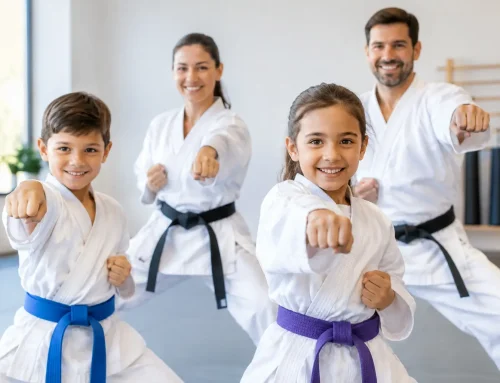
A great karate class should feel different from a crowded fitness room or a high-pressure competition team. A child should leave standing a little taller. An adult should leave feeling more capable, not intimidated. This Mission Viejo karate guide is for families and individuals looking for training that strengthens the body while building confidence, self-control, practical awareness, and a genuine sense of belonging.
Karate can be a powerful outlet for energy, stress, and personal goals. But the right program is not simply the one closest to home or the one with the loudest promises. It is the one where a student can learn safely, be encouraged consistently, and make progress at a pace that supports long-term growth.
What Karate Can Offer Beyond a Workout
Karate develops coordination, balance, flexibility, and conditioning, but those physical benefits are only part of the experience. Students practice listening, following directions, setting goals, and staying calm when something feels difficult. Those habits carry into school, work, relationships, and everyday life.
For children, structured martial arts training can give big feelings a healthy direction. They learn that confidence does not have to be loud or aggressive. It can look like making eye contact, using a clear voice, respecting personal boundaries, and asking a trusted adult for help when needed.
For teens and adults, karate can be a reset from a screen-heavy, sedentary routine. Training creates a regular time to focus, move with purpose, and learn skills that matter outside the studio. Progress may show up in a stronger stance, better stamina, or a calmer response to pressure.
The benefits depend on consistent practice and quality instruction. No class can remove every challenge a student faces, but a supportive martial arts environment can give them useful tools for meeting those challenges with more confidence.
Choosing the Right Mission Viejo Karate Program
The best class is not necessarily the most intense one. A beginner may thrive in a welcoming group where instructors explain fundamentals carefully, while an experienced student may want more opportunities to refine technique and take on leadership responsibilities. Families also need a program that fits their schedule and budget well enough to sustain over time.
Look for safety with purpose
Martial arts should teach respect for the power of physical skills. Ask how instructors introduce contact, how they match students by age and ability, and how they correct unsafe behavior. Quality training does not glorify fighting. It teaches students when to avoid conflict, how to use awareness, and why self-control comes before physical response.
A good instructor is attentive to the whole room. They can challenge a confident student without letting that student dominate others, and they can encourage a nervous newcomer without forcing them to perform before they are ready.
Notice how beginners are welcomed
The first class often tells families almost everything they need to know. Are new students given clear guidance? Do instructors learn names? Are questions treated with patience? Is effort recognized alongside athletic ability?
Everyone begins somewhere. A strong beginner program makes room for awkward first stances, missed steps, and the natural learning curve that comes with trying something new. Students grow faster when they feel safe enough to make mistakes and try again.
Ask what success means in that school
Some students enjoy tournament competition, and it can be a meaningful goal for the right person. Others are more interested in practical self-defense, fitness, focus, or social connection. Neither path is better. The important question is whether the program respects the goals that brought you there.
Look for a school that measures success broadly: improved discipline, better health, kindness toward training partners, stronger communication, and steady effort. Belts can be motivating milestones, but they should represent learning and character, not pressure or a rushed sales process.
A Mission Viejo Karate Guide to Styles and Skills
Karate is not one identical experience everywhere. Different systems emphasize different combinations of striking, movement, forms, self-defense applications, conditioning, and personal development. Rather than getting lost in style names, ask what students actually practice and why.
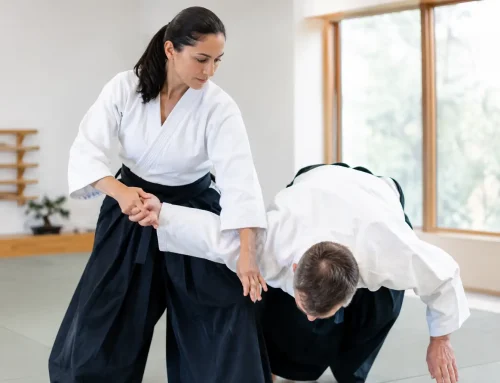
Shaolin Kempo Karate, for example, can offer a broad approach that includes striking, blocks, kicks, movement, forms, and practical self-defense concepts. Its training may also include jujutsu-based elements within the Shaolin Kempo Karate system, helping students understand distance, balance, holds, and how to move responsibly in close-range situations. That does not mean a student needs to be an athlete or enjoy rough contact. Instruction can be adapted thoughtfully for age, experience, and comfort level.
The most valuable curriculum connects technique to judgment. A student may learn how to make space, break a grip, or protect themselves, while also learning that the safest choice is often to leave, get help, and avoid escalating a situation. This is especially meaningful for parents seeking anti-bullying support. Physical skills matter, but awareness, boundaries, and confident communication matter too.
What Parents Should Expect From Children’s Karate
Children do not need to arrive focused, coordinated, or naturally fearless. They need an environment that helps them practice those qualities. In a well-run class, children learn through repetition, positive coaching, and age-appropriate challenges.
You may see your child working on a basic stance one week and a simple sequence the next. That repetition is not wasted time. It builds body awareness and teaches the value of sticking with a task. Over time, students often become more comfortable speaking up, participating in groups, and recovering from disappointment.
Parents can support the process without turning karate into another source of pressure. Ask what your child enjoyed, what felt challenging, and what they want to improve next time. Celebrate attendance and effort, not just belts or perfect technique. If a child is hesitant at first, give them time to settle in unless the program itself feels unsafe or consistently discouraging.
What Adults Can Gain From Starting Now
Many adults postpone martial arts because they believe they are too busy, too out of shape, or too old to start. Those concerns are understandable, but beginner-friendly training is designed to meet people where they are. You do not need to prove your fitness before you walk through the door.
Adult karate training can support mobility, coordination, stress relief, and personal confidence. It can also be a rare space where adults practice being learners again. That experience is humbling in a healthy way. You learn to listen, repeat, adjust, and recognize progress that is earned rather than instant.
If self-defense is your primary goal, choose instruction that includes prevention and decision-making alongside physical technique. Real-world safety is not about winning a confrontation. It is about recognizing risk, protecting your space, and making choices that help you get home safely.
Make Training Sustainable for Your Family
The program that changes lives is usually the one people can keep attending. Before enrolling, consider travel time, class schedules, the student-to-instructor dynamic, and what happens when life gets busy. A welcoming studio should help students build a routine, not make them feel guilty for being human.
Affordability matters, too. Access to confidence-building instruction should not feel reserved for only a few families. Community-centered programs can make martial arts more approachable by focusing on service, mentorship, and flexible support rather than status or exclusivity.
At OC Training Studio, the goal is to help people become well-rounded, capable individuals through encouraging instruction and meaningful community connection. Whether a student comes in hoping to build confidence, improve fitness, learn practical safety skills, or find a positive activity, the strongest first step is simply choosing a place where they feel seen.
Start with a class that invites steady growth. The right karate community will not ask you or your child to become someone else. It will help you practice the strength, focus, and courage that are already waiting to grow.