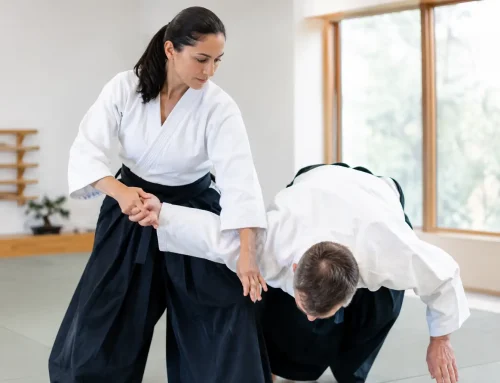
A family does not need matching uniforms or years of experience to share meaningful training time. The best martial arts family activities make room for every age, ability, and personality – from the child who needs a healthy outlet for big energy to the parent who wants to feel stronger, calmer, and more connected.
The real value is not in who throws the fastest punch or remembers the most moves. It is in practicing respect, listening, courage, and self-control together. When martial arts become a family activity, the lessons have a way of following everyone home.
What Makes Martial Arts a Strong Family Activity?
Many family activities are fun in the moment but end when the event is over. Martial arts offer something more lasting. A shared class or home practice can build physical coordination, confidence, healthy routines, and better communication at the same time.
For children, seeing a parent learn alongside them can be especially powerful. It shows them that beginners are welcome, mistakes are part of growth, and discipline is not a punishment. For adults, training with children can be a reminder that progress does not have to be perfect to be meaningful.
The best approach depends on your family. Young children usually benefit from short, playful activities with clear boundaries. Teens may enjoy goal-setting, practical self-defense conversations, or helping younger siblings practice. Adults may want a more active workout, stress relief, or a chance to develop useful safety skills. A good family martial arts routine has enough structure to feel purposeful and enough flexibility to stay enjoyable.
Best Martial Arts Family Activities to Try Together
Learn a Respectful Ready Stance
A ready stance is simple, but it teaches a lot. Stand with feet comfortably apart, knees soft, hands up in a safe guard position, and eyes forward. The goal is not to look intimidating. It is to practice awareness, balance, and the ability to respond calmly.
Take turns leading a one-minute practice. One family member can call out reminders such as “strong posture,” “kind focus,” or “breathe.” Younger children often enjoy taking the role of instructor, while parents get a chance to reinforce that martial arts begin with self-control and respect.
Create a Family Balance Challenge
Balance is a foundation for nearly every martial arts skill. Try standing on one foot for 10 seconds, then switch sides. Once that feels easy, make it more engaging by reaching toward the ceiling, slowly turning the head, or gently passing a soft object from one person to another.
Keep the challenge light. If someone wobbles or steps down, that is not failure – it is information. Encourage everyone to try again with patience. Balance activities are a wonderful way to help kids notice how focus, breathing, and body position work together.
Practice Safe Movement, Not Sparring at Home
Families sometimes picture martial arts as punching and kicking. In reality, responsible training puts safety first. At home, focus on footwork, posture, controlled movement, and knowing how to create space rather than trying to imitate combat drills.
Try a simple “mirror movement” game. One person moves slowly around an open area using small steps, turning carefully and keeping a good stance. The other person mirrors the movement from a safe distance. Switch leaders after a minute. This builds coordination and attention without physical contact.
Clear the space first, avoid rough play, and make one family rule non-negotiable: no striking or throwing techniques on another person without qualified instruction and proper supervision. Safe habits are martial arts habits.
Build a Confidence Course
Turn a living room, backyard, or park space into a simple movement course. Use safe markers such as cones, pillows, tape lines, or chalk to create stations for stepping, balancing, crawling, and controlled turns. At the end of each station, add a confidence prompt: stand tall, take a breath, and say something encouraging.
For example, a child might say, “I can keep trying,” while an adult might say, “I can stay calm under pressure.” These words may seem small, but repeated practice helps connect physical effort with emotional resilience.
The course does not need to be difficult to work. In fact, overly challenging setups can discourage younger children or family members who are new to exercise. Choose success first, then add a small new challenge as confidence grows.
Learn Boundary and Safety Scripts
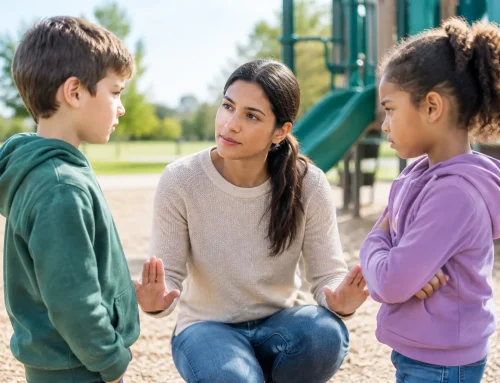
One of the most practical martial arts family activities does not involve movement at all. Sit together and practice short, clear phrases for uncomfortable situations: “Stop. I do not like that.” “Please give me space.” “I need help.” “I am going to a safe adult.”
Families can take turns acting out everyday scenarios, such as someone standing too close in line or a classmate refusing to respect a boundary. Keep the tone calm and age-appropriate. The purpose is not to make children fearful. It is to help them understand that their voice matters and that asking for help is a sign of strength.
This is also a good time to talk about awareness. Knowing where trusted adults are, paying attention to surroundings, and leaving a situation early can be far more valuable than trying to prove toughness.
Try a Family Breathing Reset
Martial arts are not only about movement. Breathing practice helps students settle their bodies, improve focus, and recover after frustration. A quick reset can be useful before school, after a stressful day, or when siblings are having a hard time getting along.
Stand or sit comfortably together. Inhale slowly through the nose for a count of three, then exhale gently for a count of four. Repeat five times. Younger children can place a hand on their stomach to feel the breath move. Teens and adults may appreciate using the pause to let go of tension in the shoulders and jaw.
A family that practices calming down together gains a tool it can use anywhere. The goal is not to erase difficult feelings. It is to respond to them with more choice.
Add a Little Magic to the Lesson
Magic and martial arts may seem like very different activities, yet both reward focus, practice, confidence, and presentation. A simple family magic trick can become a fun way to talk about persistence. The first attempt may be clumsy. The tenth can feel surprisingly smooth.
Let each family member choose a beginner-friendly trick to practice and perform. Encourage the performer to stand tall, speak clearly, and treat the audience with respect. The audience has a role, too: pay attention, offer encouragement, and celebrate effort instead of picking apart mistakes.
For shy children, magic can provide a gentle path toward confidence. For energetic children, it offers a reason to slow down and pay attention to detail. Shared laughter helps, too.
How to Keep It Positive and Sustainable
A family routine works best when it is realistic. Ten focused minutes twice a week can be more valuable than an ambitious plan that disappears after a few days. Choose a regular time, keep expectations simple, and let each person have a voice in selecting activities.
Avoid turning practice into a contest. Healthy challenges can be motivating, but constant comparison can make a child feel like they are falling behind. Celebrate personal progress instead: a steadier stance, a calmer response, a willingness to try again, or the confidence to speak up.
If your family wants deeper instruction, an in-person class can offer the guidance that home activities cannot. Qualified instructors help students learn age-appropriate techniques, train safely, build respectful partnerships, and progress with purpose. At OC Training Studio, families can find a welcoming environment where martial arts education supports confidence, wellness, and community connection.
Let Training Bring Your Family Closer
The most meaningful family practice may not look impressive from the outside. It may be a child taking one brave step onto a balance line, a teen using a clear boundary statement, or a parent choosing patience after a long day. Those moments are where confidence begins to take root.
Start small, keep it safe, and make room for encouragement. When a family learns to move, focus, and grow together, every practice becomes a chance to build happier, more capable people.