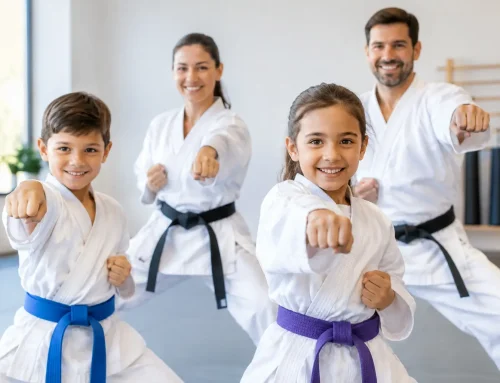
A child who arrives quietly, keeps their eyes on the floor, and waits near the edge of the mat may leave class a few months later greeting teammates by name and volunteering to demonstrate a drill. That change is not accidental. Martial arts social skills develop through repeated, meaningful moments of respect, teamwork, communication, and courage.
For families, this matters because social confidence is more than being outgoing. A socially capable child can listen when someone else is speaking, ask for help without shame, handle a disagreement without escalating it, and recognize when another person needs encouragement. Adults benefit from those same abilities, especially when work, family responsibilities, and daily stress can make genuine connection harder to find.
Why Martial Arts Social Skills Matter
Martial arts training is often recognized for strength, coordination, discipline, and practical self-defense. Those benefits are real. Yet the most lasting progress often happens between techniques: when students line up together, take turns, practice safely with a partner, and learn how to respond after a mistake.
A good martial arts class gives people a shared purpose. Everyone is there to improve, whether they are learning their first stance or refining a more advanced combination. That common goal makes conversation easier. Students do not need to arrive with perfect social confidence. They can start with a simple introduction, a respectful bow, or a question about the next drill.
The structure also helps. In many social settings, children and teens are expected to figure out the rules on their own. A martial arts class makes expectations clear: listen to instruction, respect personal space, use self-control, and treat training partners with care. Clear boundaries can be especially reassuring for students who feel nervous in group activities.
Confidence Without the Pressure to Perform
There is a difference between confidence and attention-seeking. Martial arts can teach students to stand taller and speak more clearly without suggesting they need to be the loudest person in the room.
Each small accomplishment creates evidence that growth is possible. A student remembers a sequence, completes a challenging exercise, or earns recognition for consistent effort. Over time, they begin to trust themselves. That self-trust often carries into school, friendships, presentations, and new experiences.
For children who have experienced bullying or exclusion, this can be particularly meaningful. Martial arts should never teach a child to solve social problems through aggression. Instead, quality instruction emphasizes awareness, calm communication, boundaries, and the judgment to seek help when a situation is unsafe. Physical skills matter, but the ability to remain composed and make wise choices matters just as much.
Parents may notice that progress does not always look dramatic. Sometimes it is a child raising their hand more often. Sometimes it is a teen choosing not to react to an insult. Sometimes it is an adult walking into class after a difficult day and allowing themselves to be part of a supportive group. These are powerful forms of growth.
Partner Practice Builds Respect in Real Time
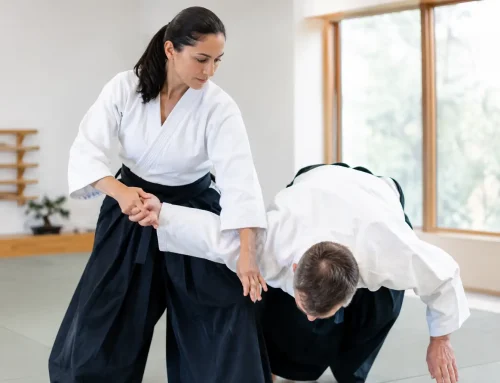
Partner drills are one of the clearest ways martial arts social skills become practical. Students must pay attention to another person, not just their own movement. They learn to adjust their speed, control their power, and communicate when something feels uncomfortable or unclear.
This teaches empathy in a direct way. If a partner is new, smaller, recovering from an injury, or simply having a difficult day, a thoughtful student learns to train with awareness rather than ego. They also learn to say, “Can we go slower?” or “Could you show me that again?” Those short conversations build the habit of respectful self-advocacy.
There is a healthy trade-off here. Training partners challenge one another, and no one improves by avoiding every uncomfortable moment. But challenge should be guided, safe, and age-appropriate. Students should leave feeling stronger and more capable, not embarrassed or pushed beyond their limits.
Listening Is a Skill, Not Just a Rule
Martial arts instructors often give directions that require attention to detail: where to place the feet, when to move, how to protect a partner, and how to reset safely. Students who listen carefully tend to make faster progress, but listening also becomes a social habit.
A student learns that listening is an active choice. It means pausing before responding, noticing tone, and giving another person room to finish. These habits improve friendships and family communication because they reduce misunderstandings before they become arguments.
Instructors and mentors play an important role here. When they correct students with patience and explain the reason behind a rule, they model the respectful communication they want students to use with others. The lesson becomes bigger than the technique.
How Families Can Encourage Social Growth Through Training
The best results happen when a student’s growth on the mat is noticed and reinforced at home. Rather than asking only, “What did you learn today?” try asking who they worked with, what was challenging, or whether they helped someone else. These questions show that effort, kindness, and connection are worth talking about.
It also helps to set realistic expectations. Some students make friends quickly. Others need several weeks of familiar routines before they feel comfortable speaking up. Introversion is not a problem to fix. The goal is not to turn every quiet child into a social butterfly. The goal is to help each person participate with confidence, communicate their needs, and feel that they belong.
Consistency matters more than a perfect start. Attending regularly lets students see the same faces, learn the culture of the class, and build trust over time. A single class can be encouraging, but a welcoming training community becomes meaningful through repetition.
At OC Training Studio, students are encouraged to grow as people as well as martial artists. That means creating an environment where beginners are respected, families feel welcome, and progress is measured by more than athletic ability. A student who learns to encourage a teammate, recover from frustration, and show up with a positive attitude is building skills that will serve them far beyond class.
The Social Lessons That Last Beyond the Mat
Martial arts do not magically remove shyness, conflict, or anxiety. A student may still have hard days at school or feel uncertain in a new group. What training can offer is a steady place to practice better responses.
Students learn that respect can be shown before they fully understand someone. They learn that discipline includes controlling their words as well as their movements. They learn that a strong community is built when people make room for beginners, celebrate effort, and hold one another to a caring standard.
Those lessons are valuable for every age. Children gain a foundation for healthier friendships. Teens gain a place to build identity without needing to compete for social status. Adults gain connection, stress relief, and a reminder that personal growth does not have an expiration date.
The next time a student steps onto the mat, the most important achievement may not be a new technique or a new rank. It may be the moment they offer a nervous classmate a kind welcome, ask a thoughtful question, or realize that they have a place in the group. That is where belonging begins.