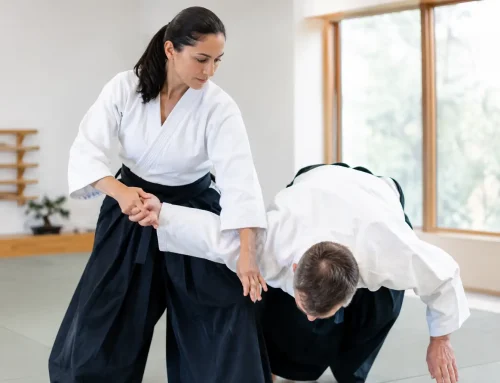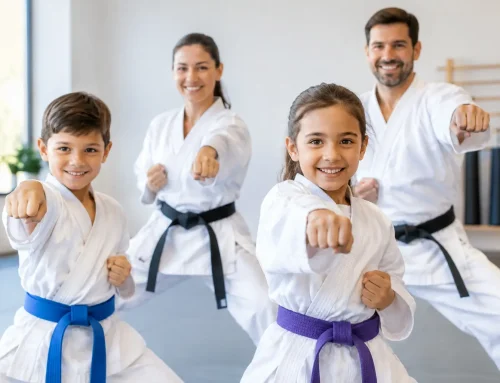
Walking into a martial arts studio for the first time can feel more intimidating than the workout itself. You may wonder whether everyone else already knows what they are doing, whether you are fit enough to keep up, or whether starting as an adult means you are already behind. This adult guide to starting jiu jitsu begins with the most useful truth: you do not need to arrive prepared to prove anything. You only need to arrive ready to learn.
For many adults, Jiu-Jitsu is appealing because it is practical, active, and deeply engaging. It asks you to pay attention to balance, distance, leverage, breathing, and decision-making under pressure. Yet the greatest benefit is often not a single technique. It is the steady confidence that comes from practicing something challenging in a safe, encouraging community.
What Adults Should Know Before Starting Jiu Jitsu
Jiu-Jitsu is often associated with grappling, holds, escapes, and learning how to manage close-range situations. Those skills can be valuable, but good martial arts training is not about teaching people to seek conflict. It is about helping them become more aware, capable, calm, and prepared.
At OC Training Studio, Jiu-Jitsu principles are part of the Shaolin Kempo Karate system rather than a stand-alone Jiu-Jitsu class. This broader approach gives adult students an opportunity to develop practical self-defense awareness alongside movement, coordination, discipline, and respect. The goal is to build well-rounded martial artists and stronger people, not simply collect techniques.
Starting as an adult can actually be an advantage. Adults often bring patience, perspective, and a clearer reason for training. Maybe you want a healthier routine after years at a desk. Maybe you want to feel more confident when walking alone, improve your mobility, or find a positive way to manage stress. A meaningful reason will carry you farther than trying to match someone else’s pace.
You Do Not Need to Get Fit First
A common mistake is waiting until you are stronger, more flexible, or less busy before trying a class. That day has a way of moving farther away. Martial arts training can meet you where you are, then help you improve gradually.
Your first classes may leave you pleasantly sore, especially if your body is not used to getting up and down from the floor or moving in new ways. That is normal. Feeling pain in a joint, numbness, dizziness, or sharp discomfort is different, and it is always appropriate to pause and tell an instructor. Safe progress is more valuable than pushing through a bad signal from your body.
If you have an injury, a medical condition, or a long break from exercise, speak with a qualified health professional when needed and let your instructor know your limits. A supportive class environment should make room for modifications. Training is personal, and the right pace is the one you can sustain.
What Your First Few Classes May Feel Like
Expect to spend more time learning than performing. Beginners often imagine martial arts as constant high-energy action, but quality instruction includes demonstrations, repetition, partner practice, questions, and correction. You may practice a stance, a movement pattern, a simple escape, or how to use your balance before advancing to the next idea.
It is also normal to feel mentally busy. Jiu-Jitsu asks your body to move in ways that may be unfamiliar while your mind remembers posture, timing, and safety instructions. Nobody absorbs it all at once. Early progress can be as simple as recognizing a position, remembering to breathe, or responding with more control than you did last week.
Training with partners can feel vulnerable at first, particularly for adults who have not played a contact sport before. Clear communication makes a difference. Tell your partner if you are new, recovering from an injury, or unsure about a drill. A good partner does not view that as an inconvenience. They see it as part of creating a safe place for everyone to learn.
How to Prepare for Your First Class
Keep preparation simple. Wear comfortable exercise clothes that allow you to bend, reach, and move easily. Bring water, arrive a few minutes early, and keep your nails trimmed for partner safety. If the studio provides specific uniform guidance, follow it, but do not let uncertainty about clothing become a reason to delay starting.
Come with a beginner’s mindset rather than a performance mindset. You are not there to win your first day. You are there to listen, move carefully, and learn the culture of the class. Being coachable is more valuable than trying to look experienced.
It also helps to set one modest goal for the first month. You might aim to attend twice a week, learn the names of a few basic movements, or simply become comfortable participating. Small goals give your effort direction without turning training into another source of pressure.
Questions Worth Asking an Instructor
Before committing, ask how the program supports beginners and how instructors handle different fitness levels. You may also want to ask about safety expectations, partner drills, class structure, and what progress looks like for an adult student. These questions do not make you difficult. They show that you are choosing a training environment thoughtfully.
Pay attention to how people treat one another. Are newer students welcomed? Are corrections delivered with patience? Does the instructor encourage control and respect? The techniques matter, but the culture matters just as much. A martial arts program should leave you feeling challenged and supported, not embarrassed or pressured.
Building a Practice You Can Keep
Adults rarely struggle because they lack potential. More often, they struggle because their schedule is full and they set an all-or-nothing standard. If you miss a class, that is not failure. Return to the next one. Consistency is built through returning, not through perfection.
Two regular classes each week may create more lasting growth than an intense burst followed by a month away. Your body needs time to adapt, and your mind needs repetition to make unfamiliar movements feel natural. Between classes, a short walk, gentle mobility work, good sleep, and enough water can support your recovery better than trying to add an exhausting extra workout.
Keep a brief note after class if it helps. Write down one skill you practiced, one question you have, and one small improvement you noticed. Over time, those notes reveal progress that can be hard to see day by day. Confidence often grows quietly before it becomes obvious.
The Real Value of Starting as an Adult
Martial arts can improve fitness, coordination, and self-defense awareness, but adults often stay because training gives them something deeper: a place to practice resilience. You learn that being new at something is not a weakness. You learn to accept correction without losing heart. You learn that calm attention can be stronger than panic.
That carries into daily life. A difficult conversation, a stressful commute, or an unfamiliar challenge may not disappear, but you may meet it with a little more steadiness. The discipline developed on the mat or training floor can become a reminder that growth is built one respectful repetition at a time.
Starting Jiu-Jitsu as an adult is not about catching up to a version of yourself from years ago. It is about giving your present self a chance to become healthier, more capable, and more connected. Show up with curiosity, treat yourself with patience, and let each class become proof that you can still begin something worthwhile.