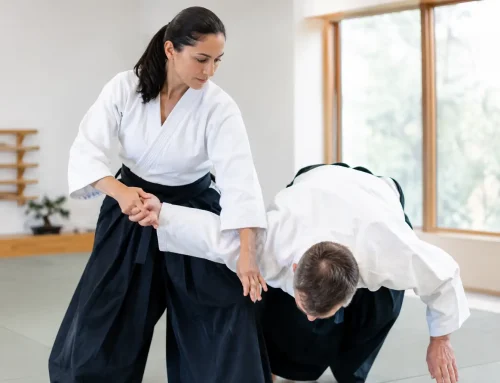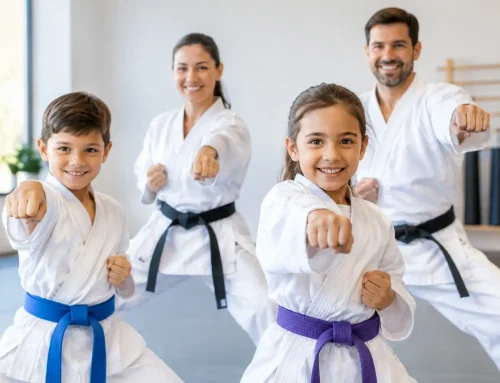
A child freezes during a partner drill. An adult beginner worries about being thrown too hard. A parent watches from the side, trying to tell whether a class is building confidence or simply demanding toughness. These moments get to the heart of what makes a dojo safe: not just clean mats or protective gear, but a culture where every person is seen, coached, and respected.
A safe dojo is not one where nobody works hard or ever feels challenged. Martial arts should ask us to grow. The difference is that challenge is guided, age-appropriate, and rooted in care. Students should leave feeling stronger, more capable, and more connected to their community – not embarrassed, ignored, or afraid to return.
Safety Starts With the Instructor
The instructor sets the emotional temperature of the room. A skilled teacher does more than demonstrate techniques. They notice who is nervous, who is overconfident, who needs a simpler explanation, and who may need to sit out for a moment. They correct behavior without shaming the student behind it.
Good instruction is clear and consistent. Students know when to line up, how to ask a question, where to stand during demonstrations, and what to do if a drill feels unsafe. Clear expectations help children feel secure, while adults appreciate knowing that training has a purpose rather than becoming random roughhousing.
An instructor should also teach according to the people in the room. A class of young beginners needs a different pace, amount of contact, and style of communication than a class of experienced adults. The best teachers can maintain standards without treating every student as if they have the same body, background, confidence level, or goals.
A safe teacher welcomes questions. If a student says, “My wrist hurts,” “I do not understand,” or “Can we go lighter?” the response should be attentive and respectful. Listening is not a weakness in martial arts. It is part of discipline.
What Makes a Dojo Safe Beyond the Mats?
Clean facilities, maintained equipment, and enough room to train matter. Mats should be kept in good condition and cleaned regularly. Training weapons, pads, and other equipment should be inspected and stored responsibly. A crowded room can still be energetic and welcoming, but it should never be so packed that students cannot move safely or instructors cannot supervise effectively.
Physical safety also includes how partners are matched. Size, age, experience, and temperament all matter. It may be appropriate for students to train with different partners over time, but a responsible instructor does not pair people carelessly just to keep drills moving. A much larger or more advanced student may be a helpful partner when they have the control to teach well. Without that control, the pairing can create anxiety or injury.
Safe training makes room for progression. Before students practice a more complex throw, lock, fall, or sparring drill, they need the building blocks: balance, posture, movement, awareness, and the ability to follow directions. In a well-run program, students earn greater intensity through readiness, not pressure.
This is especially important in a system that includes practical self-defense and jujutsu elements within Shaolin Kempo Karate training. Techniques can be valuable because they teach awareness, leverage, and self-control. But real value comes from learning them carefully, with a focus on protecting training partners as much as protecting oneself.
Respect Is a Safety Skill
A dojo can have spotless mats and still feel unsafe if students are mocked, excluded, or encouraged to prove themselves through intimidation. Emotional safety is not separate from martial arts training. It is what allows students to take healthy risks, learn from mistakes, and develop real confidence.
Respect should be visible in everyday moments. Students listen when others speak. More experienced members help beginners without acting superior. Nobody gets laughed at for struggling with a form, forgetting a sequence, or needing extra time. Corrections are specific and useful, not personal attacks.
For children and teens, this atmosphere can be life-changing. Many young people come to martial arts because they want to feel less vulnerable at school, make friends, or recover confidence after being bullied. A dojo should never recreate the same social pressure they are trying to escape.
That does not mean instructors ignore poor behavior. Boundaries are part of safety. Students need to know that teasing, aggressive contact, disrespectful language, and refusal to follow instructions will be addressed. The goal is not punishment for its own sake. It is teaching students how their choices affect the people around them.
Controlled Contact Builds Trust
Martial arts can involve contact, and that is one reason training is so powerful. Students learn how distance, timing, balance, and energy work in real life. Yet contact should always be controlled and introduced with care.
Sparring is a good example. In a safe environment, sparring is not a contest to see who can overpower the newest person in class. It is a structured learning activity with rules, supervision, protective equipment when appropriate, and a clear understanding of intensity. Students should be able to practice defense, composure, and good judgment without feeling that they must absorb unnecessary punishment to belong.
The same principle applies to self-defense drills. Students benefit from practicing realistic concepts, but realism has limits. Repeating a technique at full force on an unprepared partner does not make someone tougher. It makes injury more likely and can discourage people from continuing their training.
A good dojo teaches control as an achievement. Being able to stop a strike, guide a partner safely, or recognize when someone needs space shows far more skill than using excessive force.
Communication Includes Parents and Families
For youth programs, a safe dojo includes families in the process. Parents should understand what their child is learning, how classes are structured, and whom to speak with if a concern comes up. They should not have to guess whether their child is being pushed too hard or whether behavior problems are being handled thoughtfully.
Open communication also helps instructors support each student well. A parent may share that a child is shy, recovering from an injury, dealing with stress at school, or new to group activities. That information can help a teacher offer the right encouragement while respecting the family’s privacy.
For adult students, communication matters just as much. People may arrive with old injuries, limited fitness experience, work-related stress, or concern about starting something new. A welcoming program does not assume everyone can train the same way on day one. It offers options, explains modifications, and encourages people to build consistency at a sustainable pace.
Signs to Look for During a Visit
If you are choosing a dojo for yourself or your family, spend a few minutes watching how the room feels. You do not need to be a martial arts expert to notice meaningful signs.
Look for instructors who can see the whole class, not only the strongest students. Notice whether beginners receive guidance and whether advanced students demonstrate patience. Pay attention to how corrections sound. Firm coaching can be encouraging; humiliation is not.
Watch the students, too. Are they focused without looking fearful? Do they help one another reset after a mistake? Does the class have energy and structure? The right dojo will not be silent all the time, nor will it be chaotic. It should feel organized, attentive, and alive with purposeful learning.
Ask how the school handles injuries, partner contact, bullying, and concerns from students or parents. A trustworthy program will answer directly. It will not dismiss questions or act as though safety policies are unnecessary because “this is martial arts.”
Safety Creates Stronger Martial Artists
Some people mistakenly believe that a harsh environment creates strong students. It can create compliance for a while. Lasting strength comes from something deeper: the confidence to try, fail, learn, and return with more awareness.
At OC Training Studio, martial arts is meant to support well-rounded growth. Students can build practical skills while learning respect, resilience, healthy habits, and the value of showing up for others. That kind of training serves a child facing a difficult school day, an adult rebuilding confidence, and a family seeking a positive place to belong.
The best dojo does not ask students to choose between safety and challenge. It gives them both. When people are protected by clear boundaries, caring mentorship, and thoughtful instruction, they have room to become brave in the ways that matter most.