Choosing a martial art can feel personal because it is. When families compare aikido vs jiu jitsu, they are often asking more than which style has better techniques. They are asking where a child will feel supported, how an adult can build real confidence, and what kind of training they will want to continue month after month.
Aikido and jiu jitsu share historical connections, but they create very different training experiences. One emphasizes blending with energy and redirecting force. The other places more focus on control at close range, including grips, escapes, takedowns, and positional awareness. Neither path is automatically right for every person. The best choice depends on your goals, comfort level, learning style, and the quality of guidance you receive.
Aikido vs Jiu Jitsu: The Core Difference
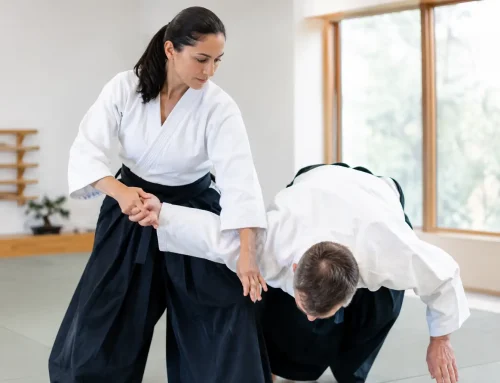
Aikido is often recognized for its flowing movements. Rather than meeting force with force, students learn to move off the line of an attack, maintain balance, and guide an opponent’s momentum away from them. Training can include wrist releases, joint-control techniques, throws, falls, and practice with traditional training weapons. At its heart, aikido encourages calm decision-making under pressure.
Jiu jitsu, a name used for several related traditions, is built around solving problems when someone is close enough to grab, push, hold, or take you down. Depending on the system, students may work on throws, locks, pins, ground escapes, and controlling positions. Modern Brazilian Jiu-Jitsu is especially known for ground-focused training, while traditional jujutsu systems may include a wider blend of standing and self-defense techniques.
The difference is not simply “soft” versus “hard.” Both arts require focus, timing, body awareness, and respect. Aikido generally starts with the question, “How can I redirect this energy safely?” Jiu jitsu often starts with, “How can I regain control when a situation has become close and physical?”
What Training Feels Like
Aikido training tends to be cooperative in its early stages. Students practice with a partner who gives a planned attack, then learn how to respond with posture, footwork, and controlled technique. Partners take turns as the person applying the technique and the person receiving it. Learning to fall safely, often called ukemi, is a major part of the process.
This structure can be especially welcoming for people who are nervous about martial arts or who want to develop coordination without beginning in an intensely competitive setting. A good aikido class still asks students to be attentive and disciplined, but the environment often feels reflective and relationship-centered.
Jiu jitsu training may feel more immediate because students regularly work from close contact. They learn how to use leverage when strength alone is not enough. Many programs include live resistance, sometimes called sparring or rolling, where partners try to apply what they have learned against someone who is actively responding.
That pressure-testing can be valuable. It helps students see which skills hold up when timing is imperfect and another person is moving unpredictably. It can also feel demanding for beginners, especially those who are uncomfortable with close-range contact. A patient instructor and a respectful class culture make a meaningful difference.
Self-Defense Is More Than Technique
For practical self-defense, both arts offer useful lessons, but they serve different moments of a situation.
Aikido can help students develop awareness, calm movement, distance management, balance, and the ability to avoid escalating a conflict. Its emphasis on control and redirection aligns well with the goal of getting home safely rather than proving who is tougher. For children and teens, that mindset supports anti-bullying conversations: use your voice, seek help, create space, and protect yourself without turning every conflict into a fight.
Jiu jitsu can offer practical answers when avoidance has already failed and someone is grabbing, holding, or forcing close contact. Learning how to escape from underneath a larger person, stand up safely, or control someone without striking can build powerful confidence. Still, physical techniques are only one part of personal safety. Awareness, boundaries, verbal skills, and knowing when to get help matter just as much.
No martial art can promise a simple answer to every real-world situation. Size, surroundings, multiple people, weapons, stress, and legal responsibility all change the picture. The most responsible training teaches students to avoid danger whenever possible and to use physical skills only when necessary for protection.
Which Style Is Better for Children?
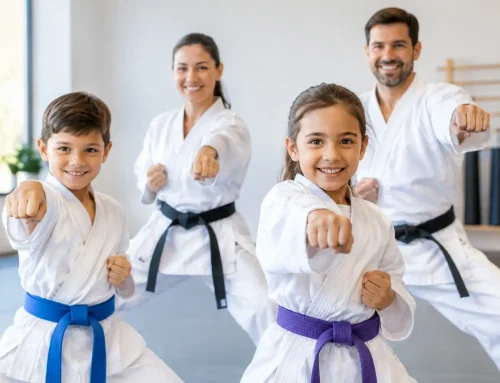
The answer depends less on a child’s age than on their personality and the teaching environment. A child who needs help with focus, body control, patience, and emotional regulation may enjoy the structure and flowing movement of aikido. The practice of working carefully with a partner can reinforce respect, listening, and self-control.
A child who enjoys problem-solving, active movement, and learning what to do when someone grabs them may connect with jiu jitsu concepts. Close-contact practice can also help some students become less fearful of physical pressure, provided instruction remains age-appropriate and closely supervised.
Parents should look beyond a style name. Watch how instructors correct students. Notice whether beginners are welcomed, whether safety rules are clear, and whether children are taught to respect partners of every ability level. The right class should help a young person leave feeling challenged, seen, and more capable, not intimidated or left behind.
A Note on Jujutsu Within Shaolin Kempo Karate
At OC Training Studio, jujutsu principles are part of the broader Shaolin Kempo Karate system rather than a separate jujutsu-only class. This integrated approach can be a great fit for students who want a well-rounded foundation. Alongside close-range escapes, controls, and leverage-based techniques, students can develop striking, movement, awareness, discipline, and practical self-defense habits.
That matters for families who do not want to choose a single narrow skill set too early. A broad martial arts education gives students room to discover what builds their confidence. Some may love the flowing focus of aikido. Others may feel most empowered by the close-range problem-solving found in jujutsu-based techniques. Many benefit from understanding both.
How to Choose Between Aikido and Jiu Jitsu
Start with the outcome you want, not the style that looks most impressive online. If your priority is graceful movement, balance, calm under pressure, and redirecting force, aikido may be a natural match. If you want to become more comfortable with grabs, clinches, escapes, and physical control at close range, jiu jitsu concepts may speak to your goals.
It is also reasonable to choose based on what will keep you training. A martial art only helps when it becomes a consistent practice. The best program is one where you feel safe asking questions, where instructors know how to teach beginners, and where progress is measured by more than belts or competition results.
Adults should be honest about practical needs too. Someone returning to exercise after years away may prefer a gradual, supportive start. A person looking for a highly physical outlet may want more resistance-based practice. Children may need a program that strengthens confidence and social skills before they are ready for intense physical challenge. There is no weakness in choosing the pace that supports long-term growth.
The Strongest Choice Is a Supported One
Aikido and jiu jitsu can both teach valuable skills: how to move with purpose, protect personal space, stay composed, and treat training partners with respect. Their methods differ, but their best lessons reach beyond the mat.
Choose the environment where you or your child can practice consistently, learn safely, and be encouraged to grow. Confidence is not built in one dramatic moment. It grows through patient instruction, small victories, caring mentorship, and a community that reminds every student they belong.