A child walking from school, a teen meeting friends at the mall, and an adult heading to the car after work all face the same basic question: what helps a person feel prepared without living in fear? A useful personal safety guide begins there. Safety is not about expecting the worst from every stranger or avoiding the world. It is about building calm awareness, practicing good choices, and knowing that asking for help is a strength.
For families, personal safety works best as an ongoing conversation rather than a single serious lecture. Children and teens need practical language they can remember under stress. Adults need habits that fit real life. Everyone benefits from confidence that comes from preparation, not panic.
Personal Safety Guide: Awareness Before Action
The first layer of safety is noticing what is happening around you. That sounds simple, but distractions can make it difficult. Looking down at a phone while walking, wearing both earbuds in an unfamiliar place, or rushing through a parking lot after dark can reduce awareness at the exact moment it matters most.
Awareness does not mean being suspicious of everyone. It means paying attention to your surroundings, your route, and your instincts. If a place, person, or situation makes you uneasy, you do not need to prove that something is wrong before making a safer choice. Move toward other people, enter a business, call someone you trust, or change direction.
Parents can help children practice this in everyday settings. Ask them to notice safe adults they could approach in a store, at a park, or at school. Talk through what they would do if they were separated from you. The goal is not to make a child anxious. It is to help them recognize that they have options.
For teens and adults, awareness includes planning ahead. Know where you are going, how you are getting home, and who expects you back. When possible, avoid walking alone in isolated areas and let a trusted person know if plans change. These small habits are not restrictive. They create more freedom because they reduce uncertainty.
Trust Instincts, Then Make a Plan
People sometimes dismiss an uncomfortable feeling because they do not want to seem rude, dramatic, or unfriendly. That hesitation can keep someone in a situation longer than they need to be. Personal boundaries do not require an apology.
A child should know that they never have to go anywhere with an adult without a parent or caregiver’s permission, even if that adult seems familiar or offers a convincing reason. A teen should know they can leave a gathering that feels unsafe and call home without facing shame or punishment. An adult should know they can step away from a conversation, decline a ride, or make a scene if necessary.
A simple family safety plan can make these decisions easier. Choose a code word for pickup changes so children know when a message is truly coming from their parent or caregiver. Decide on a reliable contact person if a family member cannot be reached. For older children and teens, discuss how to call, text, or use location sharing appropriately during an emergency.
Technology can help, but it is not a substitute for judgment. A phone can run out of battery, lose service, or be inaccessible in a stressful moment. Knowing how to identify safe places, ask directly for help, and use a clear voice still matters.
Use Your Voice Early and Clearly
One of the most practical safety skills is the ability to communicate boundaries. Many people are taught to be polite before they are taught to be direct. Courtesy has value, but safety comes first.
Practice clear phrases at home so they feel natural when needed: “No.” “Stop.” “Back up.” “I do not know you.” “I need help.” Children do not need a long explanation when something feels wrong. A loud, firm voice can draw attention, create space, and make it clear that a boundary has been crossed.
The right response depends on the situation. If someone is simply too close in line, a calm request for space may be enough. If a person is following, threatening, or attempting to control someone, the priority changes. Move toward people and light, call emergency services when appropriate, and make enough noise to attract attention.
It can also help to practice how to ask a specific person for help. Instead of shouting generally into a crowd, say, “You in the blue shirt, please call 911,” or “Can you stay with me while I call my parent?” Specific requests often give bystanders a clear way to respond.
Physical Self-Defense Is a Last Resort, Not a First Move
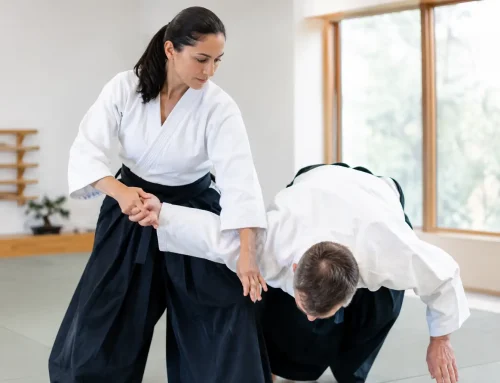
Self-defense training can strengthen confidence, coordination, and decision-making. It also teaches an essential truth: the safest outcome is usually getting away, not winning a confrontation.
Physical techniques are most useful when paired with awareness, verbal boundaries, and escape planning. Training helps students understand balance, distance, movement, and how to protect themselves if they cannot immediately leave. But no class can promise total control in every situation. Size, surprise, environment, multiple people, and stress all affect what is possible.
That is why responsible martial arts instruction emphasizes restraint alongside skill. Students learn to avoid unnecessary conflict, de-escalate when they can, and use only the force needed to create a chance to escape and get help. This approach builds confidence without encouraging aggression.
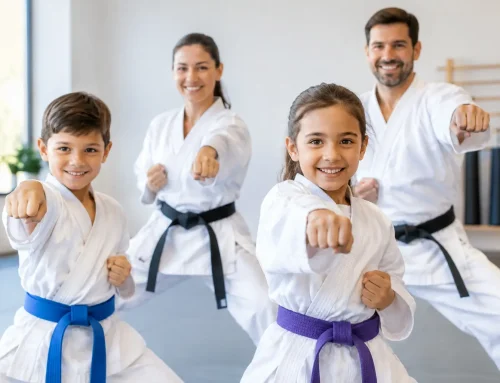
For children especially, the message should be clear: martial arts are not for showing off, starting fights, or solving everyday disagreements with physical force. They are tools for discipline, self-control, and personal protection when there is no safer option.
At OC Training Studio, students can build these foundations through supportive martial arts training that treats confidence and character as part of the lesson. Shaolin Kempo Karate, which includes elements of Jiu-Jitsu within its system, can help students develop body awareness and practical movement while learning respect for others.
Safety at School, Online, and With Friends
Personal safety is not limited to parking lots and unfamiliar streets. It includes social pressure, bullying, and digital spaces where discomfort can be easy to hide.
Children and teens should know that bullying is not something they have to handle alone. Encourage them to save messages, tell a trusted adult, and keep speaking up if the first response does not solve the problem. A strong safety plan includes teachers, counselors, coaches, family members, and other adults who will listen.
Online, privacy deserves the same care as physical space. Avoid sharing locations, daily routines, school details, passwords, or private photos with people who have not earned trust. If a conversation becomes threatening, sexual, manipulative, or secretive, stop responding and tell a trusted adult. A person who cares about you will not pressure you to hide communication from the people responsible for your safety.
Friend groups matter, too. Before an outing, agree on how everyone will get home and what to do if someone feels uncomfortable. A good friend does not abandon someone for wanting to leave. They help make the safer choice.
Build Confidence Through Practice
Safety conversations are most effective when they are calm, regular, and age-appropriate. Rather than asking, “What would you do if something terrible happened?” try practicing small, useful scenarios. What if you cannot find your parent at a store? What if a ride changes unexpectedly? What if your friends want to go somewhere you do not feel comfortable?
Rehearsal turns vague advice into a usable response. It also gives children and teens permission to make choices that protect them, even when those choices feel socially awkward. Adults can model this by trusting their own boundaries, checking in with loved ones, and speaking respectfully but directly.
Confidence is not the belief that nothing challenging will happen. It is the belief that you can pause, assess, choose, and reach for support when it does. The most meaningful personal safety habit may be this: remind yourself and your family often that safety is a shared responsibility, and no one has to face a difficult moment alone.